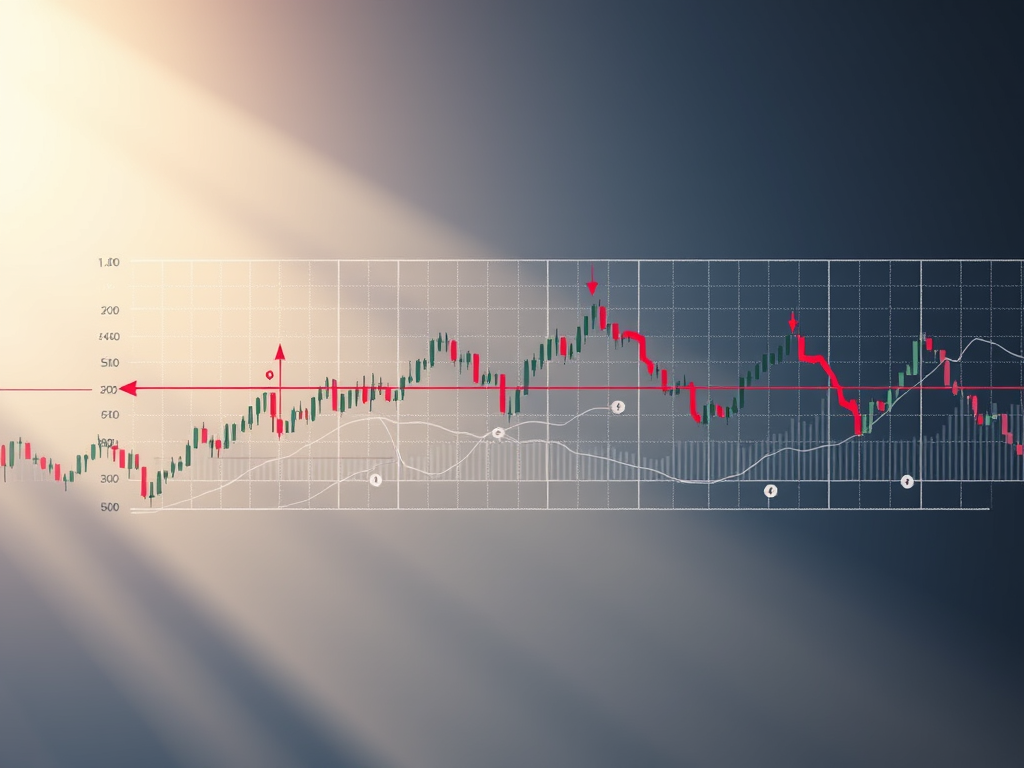
Not every market rewards directional conviction. There are periods when price does not trend cleanly upward or downward, but instead oscillates within a broad range. In these conditions, strategies built for trend capture can underperform, while range-based frameworks such as grid trading become more attractive.
Grid trading is conceptually simple. A trader defines an upper and lower price boundary, divides that range into multiple levels, and places orders systematically across the grid. As price moves down, the strategy accumulates buys at lower levels. As price recovers, it sells into higher levels. The objective is not to predict the next breakout, but to monetize repeated movement within the band.
What makes the strategy appealing is its mechanical logic. Rather than depending on emotional judgment at every swing, the trader can rely on predefined spacing, position distribution, and execution rules. This makes the framework particularly suitable for automated systems, where discipline and consistency matter as much as timing.
However, grid trading is often misunderstood as low-risk simply because it is systematic. It is not. The strategy performs best when the asset remains within the chosen range. Its weakness becomes clear when the market trends strongly beyond that range. In a persistent downtrend, for example, a grid may keep accumulating exposure as price falls, increasing inventory risk. In a strong uptrend, it may repeatedly sell too early and underparticipate in continuation.
This means the quality of the grid depends on more than spacing alone. Range selection, capital allocation, regime identification, and out-of-range protection are all central to strategy design. A grid without risk controls is not a robust trading system; it is only a repeated order pattern.
For traders using crypto automation, the lesson is clear: grid trading is a tool, not a universal solution. In sideways markets, it can be highly efficient. In trending markets, it can become vulnerable unless paired with adaptive logic or explicit exit rules. The strategy’s value lies not in complexity, but in matching its structure to the correct market environment.

Leave a Reply